Why does photography, as an expression of art, always carry the classification ‘fine art photography’? Why can’t it be classified as contemporary art, in the same light as Yayoi Kusama, Jeff Koons, or Takashi Murakami? Furthermore, why is this important to me?
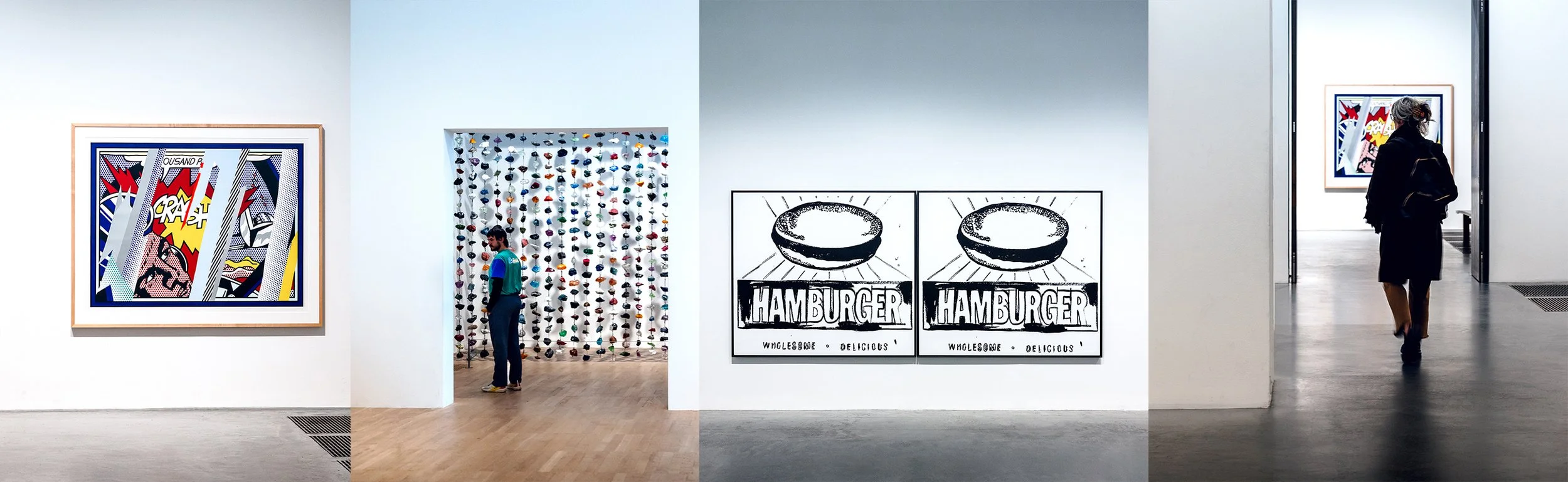
Sure, fine art photography occasionally has a moment, but I don’t see it as a constant fixture in the TATE gallery, or in a prominent place in MOMA, I don’t see fine art photos auctioned at Sotheby’s, along side the masters of painting and contemporary art. Photography doesn’t get the same respect, but it should…
Every now and then you will see an exhibit from one of the masters of photography. I’ve seen Joel Meyerowitz in the TATE. Edward Burtynski in the Saatchi gallery. I bumped into a Steve McCurry exhibition by accident, his work was in the basement, he deserves more than that. Photography has so much more to give to the traditional art institutions. I see up and coming painters having really prominent positions in major galleries across the world, I see celebrities have their highly marketable ‘paint by numbers’ exhibitions, I don’t see photographers in these arenas, unless they are in the twilight of their career or already dead. We have to ask, why aren’t up and coming photographers given a chance on this stage?
So why don’t we see many photographs in major art galleries?
Aside from historical bias against photography, perhaps one simple reason is that a lot of photographers keep their work confined to a hard drive and a screen, therefore, there is no interest from art institutions. Printed photographs are rare these days, and printed photographs in the size a gallery demands barely exist.
Perhaps another reason is that photography defined as ‘artistic’, or gallery worthy, strongly correlates to minimalism, like a long exposure of a pier with smooth water and a clear sky, with a complimentary colour harmony, or black & white. Could a minimalist photo stand side by side with a minimalist painting? Mark Rothko, often slated by art critics for ‘lack of effort’ because his images look minimal, has paintings that are 9 feet tall, the depth and texture of his paintings draw you closer, something that at a distance looks so easy, suddenly becomes infinitely more complex when you stop and stare, and then you realise ‘red on maroon’ has as many shades of colour as Claude Monet’s Water Lilies, the realisation hits, he’s an abstract expressionist. For photographers… is that where the potential lies?
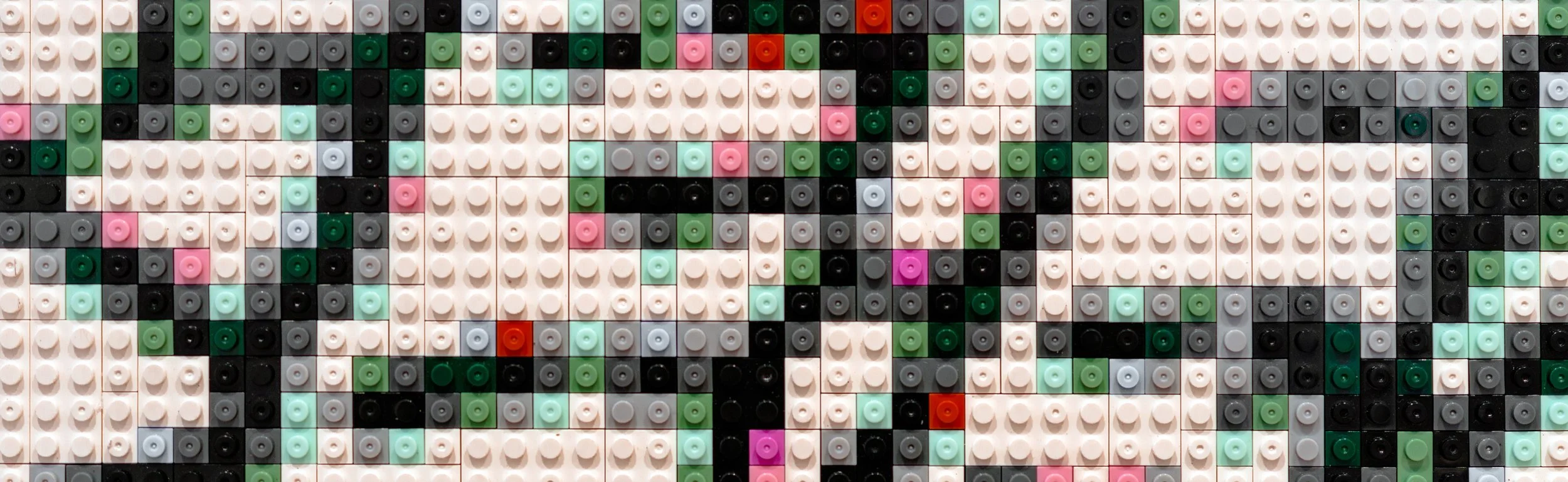
I see more art made of lego than photographs in major galleries. Surely art curators appreciate photography, but they need something more…
What defines a contemporary photograph that’s worthy of being exhibited in major galleries worldwide?
It must be printed in a large size that breaks usual photography convention. If the printed work fits on a wall in a normal house, it isn’t big enough.
It must be complex. Participants must stop and stare, they must observe, they must be able to create their own narrative. A fine art photo can be seen and appreciated in the blink of an eye, and from a distance, galleries demand the ‘stop and stare’ factor.
It must defy typical colour science. Gallery images are big, bold, vibrant. A photograph edited with conventional techniques will not hold its ground when hung along side a contemporary painting.
It must be printed on the best quality paper. Paper choice must carry weight. 300GSM+, 10cm+ border, ink that holds for hundreds of years, deckled edges, floated, all add to the wow factor.
A breathtaking photo needs a breathtaking frame. A 40mm frame that tightly hugs a white passe partout looks classy in your living room, but this is contemporary art. Multiple layers, multiple forms, contrasting against the bright white gallery wall. The frame must command presence without overpowering the photo, so limit it to a single contrasting colour or material. The frame must also protect the art from discolouration, and allow the art to keep its form & value for centuries.
Photographers must treat their photo like art. A certificate of authenticity, a story, a signature, a value. The size exhibited must be a 1/1, no prints anywhere near that size for the rest of eternity. This is where the value in a single photo lies. Editions in a smaller size, sure. And an open edition poster is absolutely acceptable, it’s what all the galleries do… the irony being, the poster of the painting is a photograph!
Are there any artists that do this well?
I can think of one… Edward Burtynski. The scale of the display at the Saatchi gallery in 2024 was something i’ve never seen before from a photographer, the detail within the images forced you to observe, visitors were taking time, in awe at his work. I came home wanting to buy one of the pieces on display. A quick research on prices put an abrupt end to that dream, but I did buy his book from the exhibition, it’s still on display in my office today.
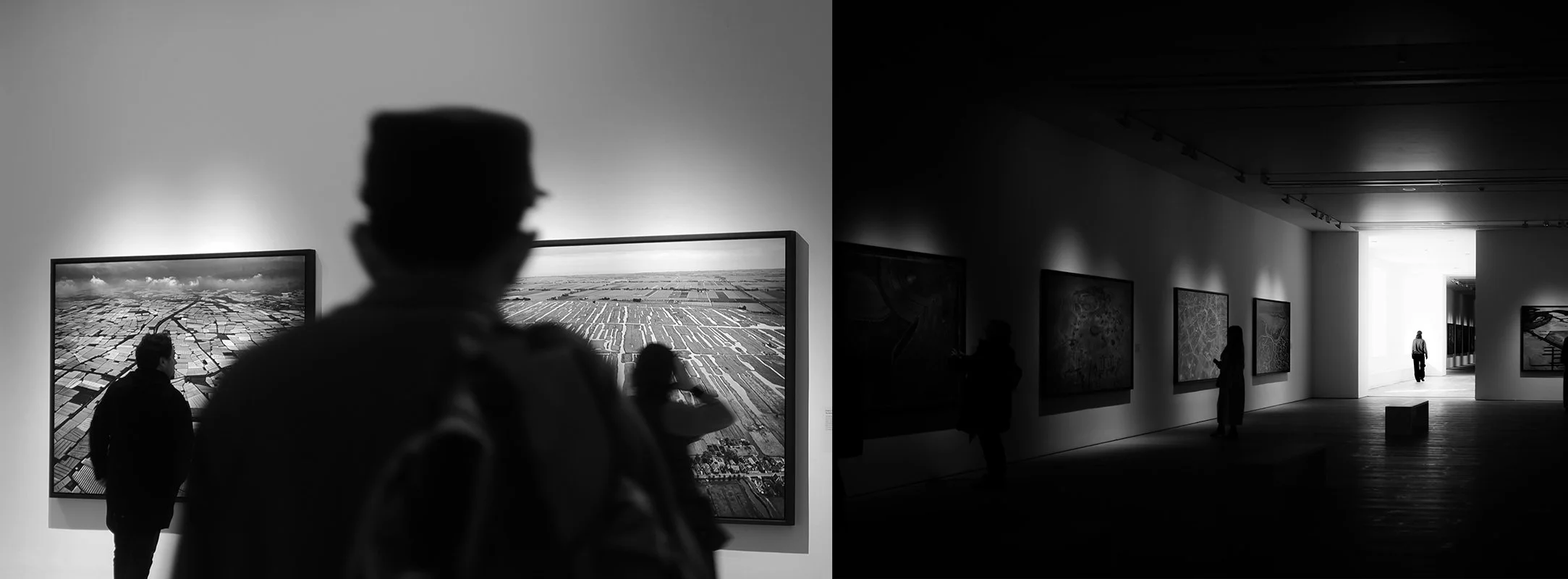
Edward Burtynski’s work on display at the Saatchi Gallery, 2024. photography by Andrew Nelson.
Why is this topic important to me?
I want to enter the world of contemporary art with photography. I want my work to be seen in major international galleries.
This is my dream.
My series on abstract expressionism is the entry, where I challenge the boundaries between conventional photography and contemporary art. You can see my work here.
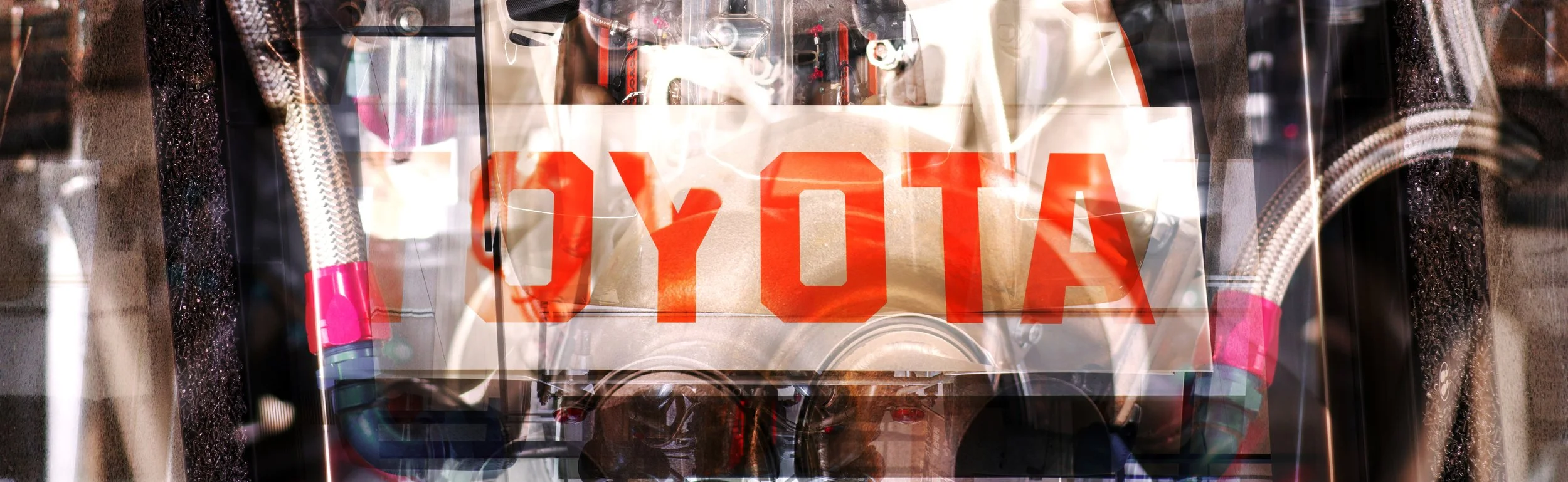
An extract from ‘Expression 008’, part of my series exploring photography as contemporary art.